Elder Friendly Home

ELDER-FRIENDLY HOMES

Help Your Parents Feel Safer at Home

A slippery bathroom, a difficult step or poor night lighting can make familiar spaces harder to use. Crystal Care Health helps families assess the home, prioritise practical changes and coordinate suitable modifications for older adults.

Home assessment • Practical recommendations • Installation coordination

Small changes. Easier everyday living.

When Everyday Spaces Start Feeling Difficult

An assessment may help when you notice

Unsteady Bathroom Movement

Difficulty standing up from the toilet, entering the shower or moving across wet floors.

A Fall or Near Miss

Slipping, stumbling or needing to hold furniture and walls for support.

Difficult Night-Time Access

Poor lighting or obstacles between the bed and bathroom.

Changing Mobility

New difficulties after illness, surgery or a gradual change in strength and balance.

Reviewing the home early can help families plan appropriate changes before another difficulty arises.

Make the Home Work Better, Room by Room

Recommendations are based on the person’s daily routines, the home’s layout and what can be installed appropriately.

Bathroom Safety

Suitable grab rails, shower chairs, floor-safety options and easier access around the toilet and shower.

Safer Walking Routes

Review of loose rugs, clutter, thresholds and furniture placement along frequently used routes.

Lighting & Visibility

Improved lighting around beds, corridors and bathrooms, including suitable night-light options.

Bedroom & Seating

Review of bed access, chair height and the placement of everyday essentials.

Emergency Calling

Call-button options and accessible placement, supported by an agreed arrangement for who responds.

Everyday Accessibility

Practical improvements to handles, switches, storage and other frequently used features.

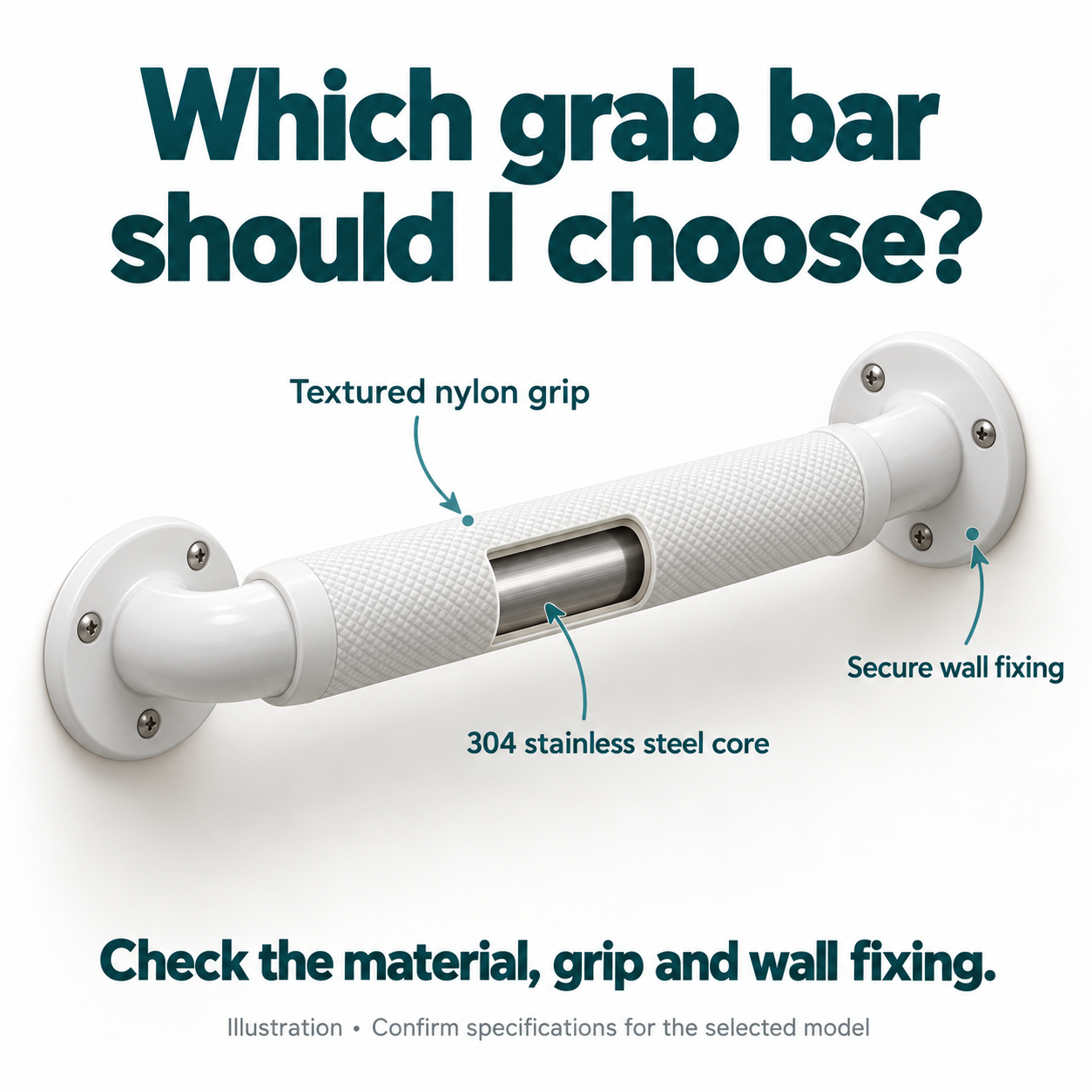
Which Grab Bar Should You Choose?

Compare bathroom grab bars for elderly parents: understand the material, size and placement before choosing.

Look for a documented 304 stainless steel core, a comfortable textured nylon grip and suitable wall fixings.
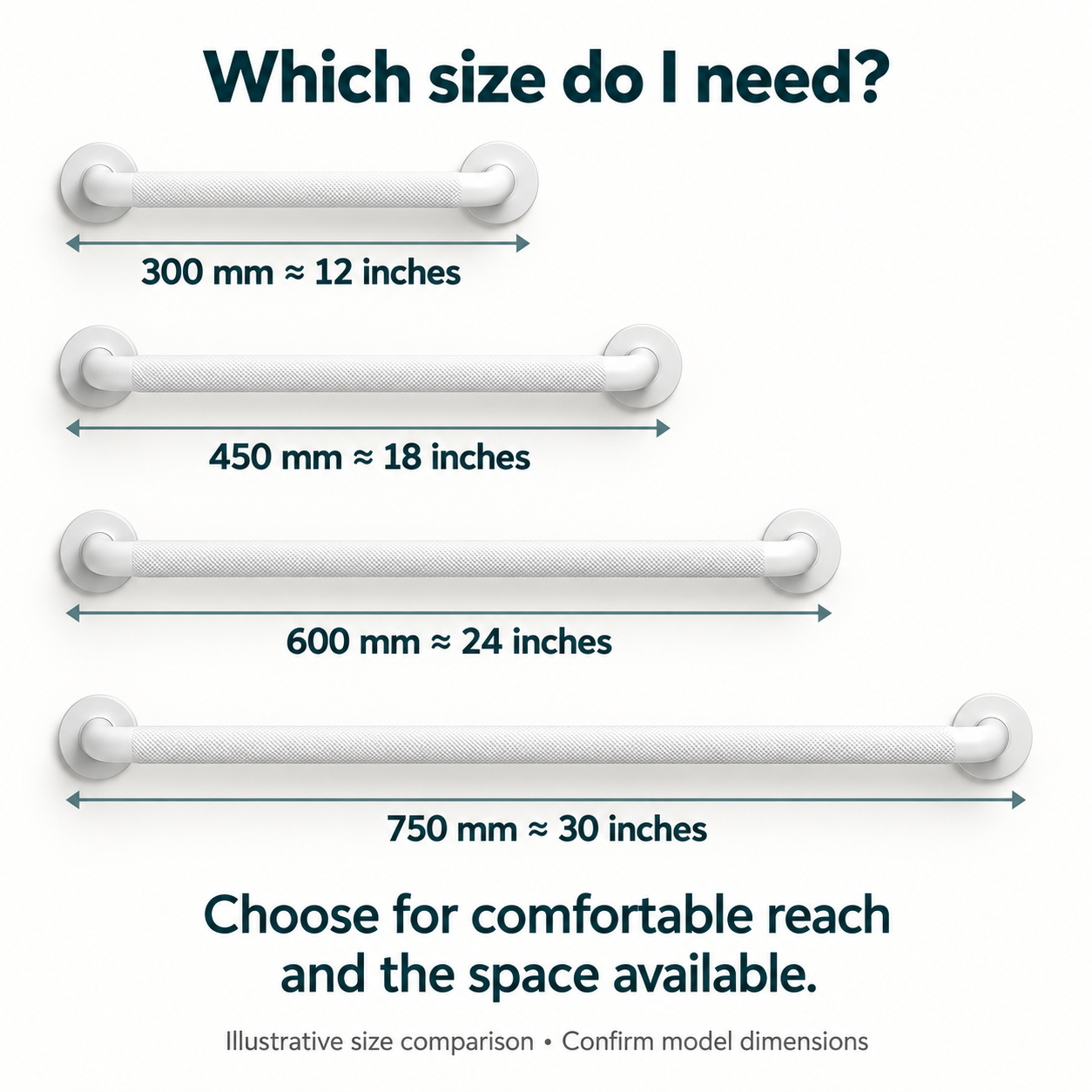
Common metric sizes are 300, 450, 600 and 750 mm, approximately 12, 18, 24 and 30 inches. Confirm the selected model’s dimensions.
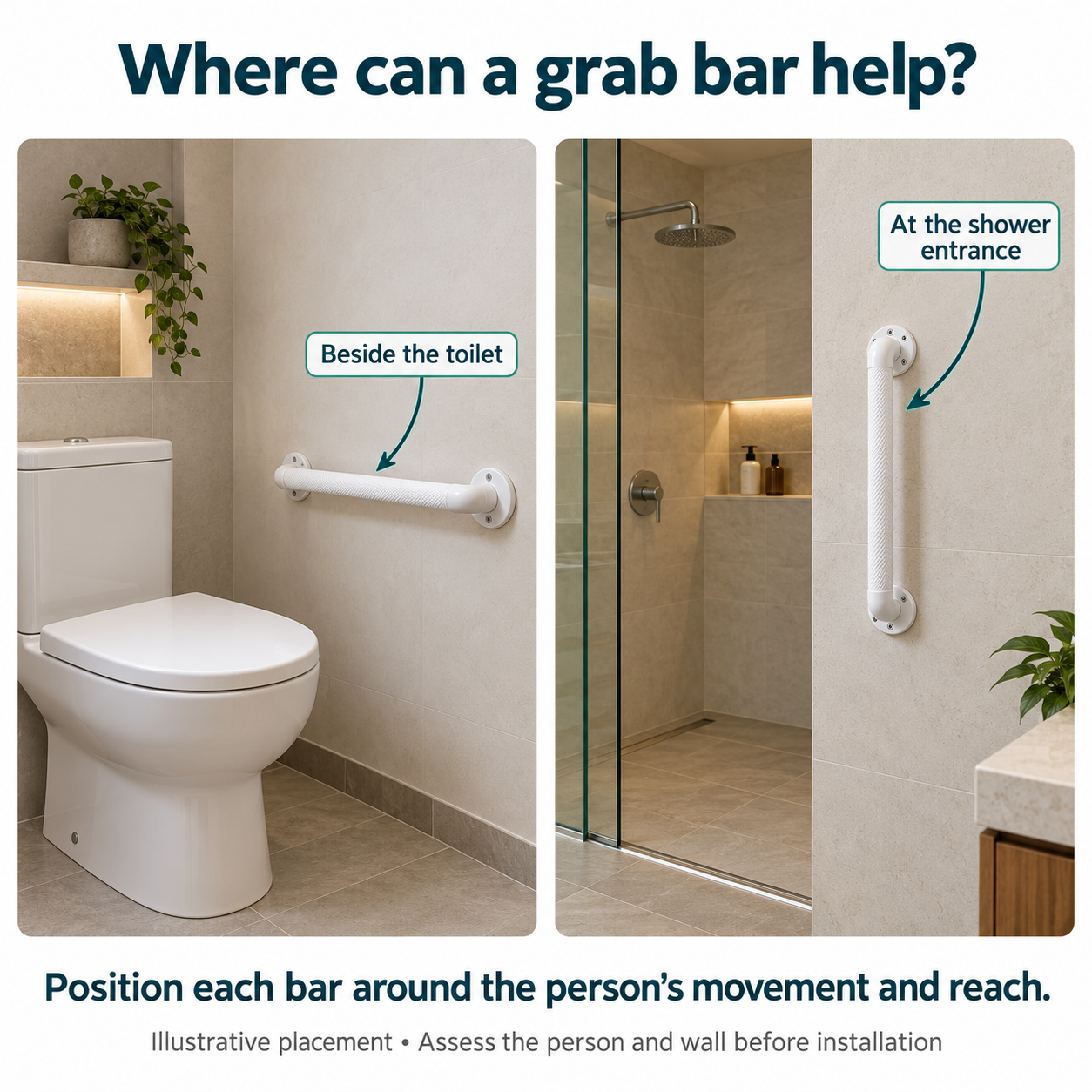
Placement beside the toilet or shower entrance should suit the person’s movement, reach and wall conditions.
Images are illustrative. Product specifications and installation suitability must be confirmed for your home.

Shower Chair Make Bathing Easier

“A suitable shower chair offers a seated option for older adults who find standing during bathing difficult. Compare support, stability and fit before choosing.

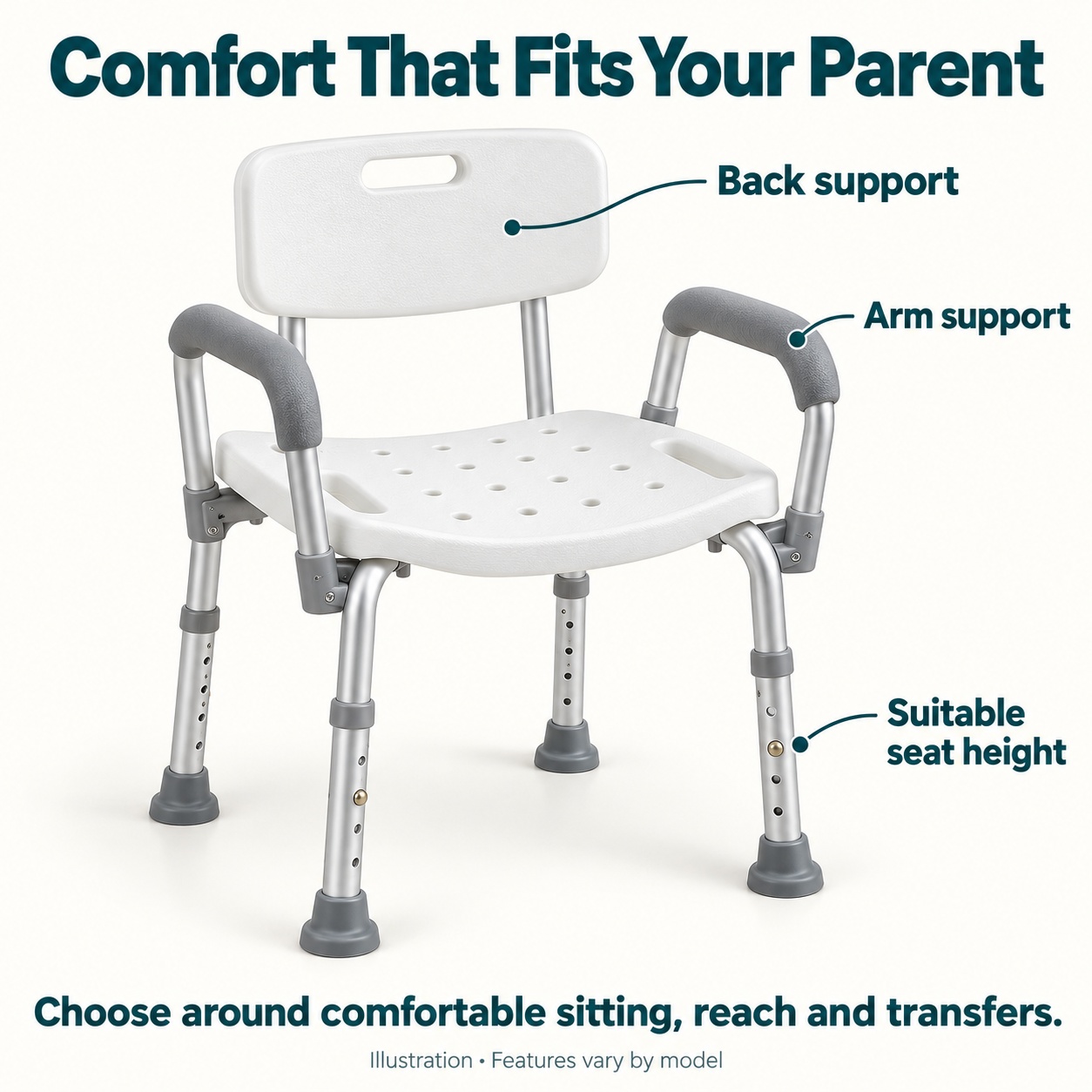
Shower chair showing back support, armrests and adjustable seat height.

Check slip-resistant feet, seat drainage and a stable position with all feet supported.

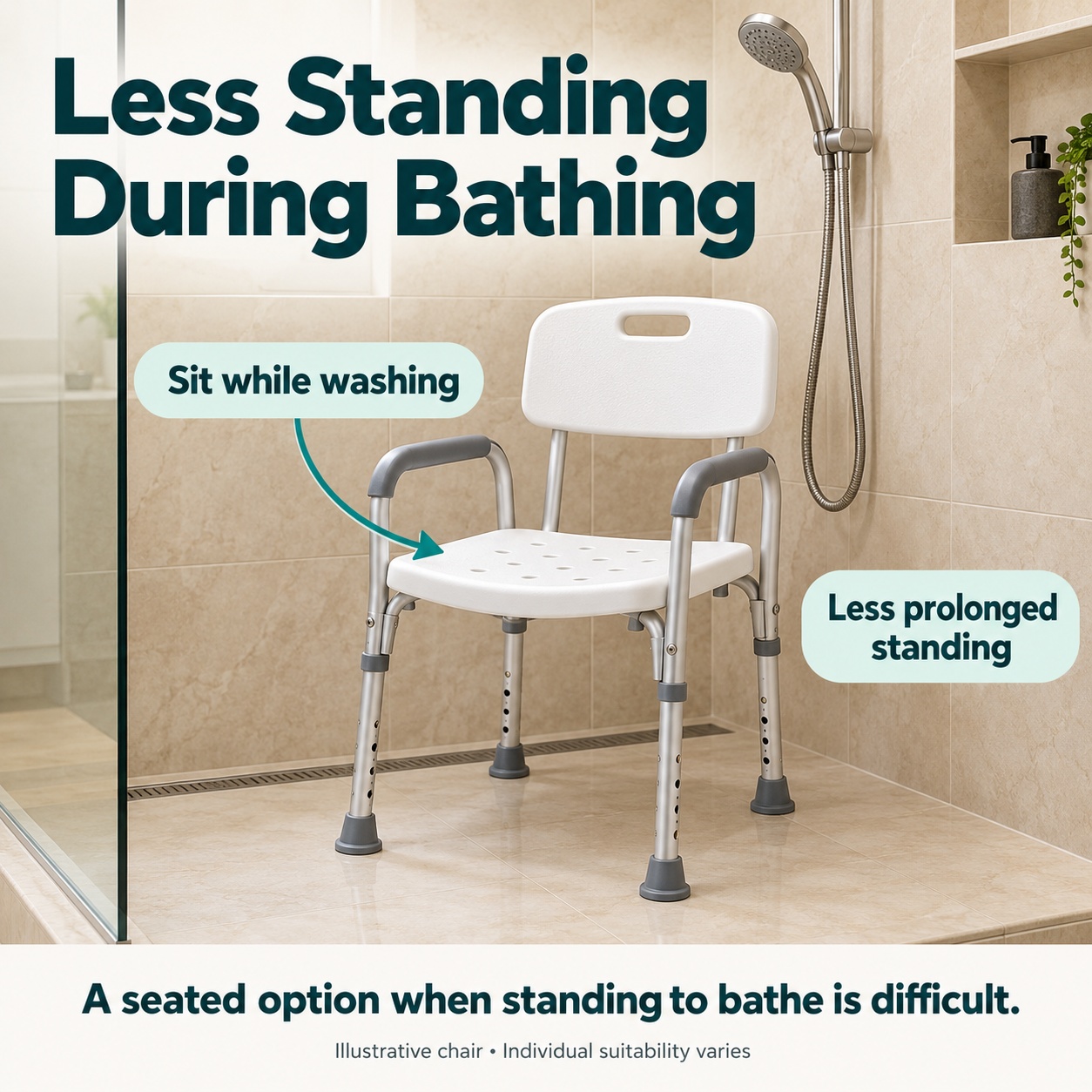
Shower chair with backrest and armrests positioned inside a shower.

A seated option when standing to bathe is difficult. Assistance may still be needed.

Shower chair showing back support, armrests and adjustable seat height.

Consider back support, armrests and a suitable seat height. Confirm dimensions and the manufacturer’s weight limit.

Buying Check

Before buying: measure the chair’s full footprint, allow room for sitting, standing and assistance, and check the selected model’s instructions.
Rubber feet and suction-cup feet are different. Suction-cup options require confirmation of the model and compatible floor surface.
Why consider seated bathing?
MedlinePlus advises sitting on a bath chair or bench when showering. NHS guidance discusses bathroom adaptations such as seats and supporting independence where safe.
These resources offer general guidance, not endorsement of Crystal Care or a particular product.
Share your pincode and what makes bathing difficult.

Images are illustrative; features vary by model. A shower chair does not eliminate fall risk or replace assistance. Seek professional advice if sitting, standing or transfers are difficult.

DO NOW

Address the most pressing environmental concerns identified during the assessment.

DO SOON

Plan changes that can make daily activities easier and support independence.

PLAN AHEAD

Consider future needs as mobility, routines or care requirements change.

From Home Assessment to Agreed Improvements

1

Tell Us What Is Difficult

Share your location, your family member’s needs and the spaces causing concern.
2

Review the Home

Assess relevant rooms, access points and everyday movement routes.
3

Agree on Priorities & Costs

Review the recommendations and an itemised quotation for the work you choose.

4

Coordinate & Check

Coordinate agreed products and installation, then check completion against the agreed scope.

Elderly Home Safety Assessment: What Your Family Receives

Understand which changes could make everyday spaces easier for your parent to use. Receive room-wise observations and practical recommendations for the areas assessed.

Recommendations that Fit your Home

Understand concerns around bathroom access, bedroom movement, walking routes and lighting.

A Look Inside Your Home Safety Assessment

Illustrative example. Recommendations depend on the person and property.

BATHROOM

Concern noticed:

Difficulty getting up from the toilet.

What we review:

Movement, available space and whether suitable support can be installed.

BEDROOM

Concern noticed:

Difficulty reaching the light from bed.

What we review:

Switch access, lighting and placement of everyday essentials.

WALKING ROUTE

Concern noticed:

Furniture restricts the route to the bathroom.

What we review:

Clearance, obstacles and possible layout changes.

Assessment charges are confirmed before booking. Products and installation are quoted separately according to the agreed scope.

Support Beyond the Assessment

Room-Wise Observations

We consider the individual, the room and the practical limitations of the property.

Clear Responsibilities

Agree on the work, products, installation responsibilities and applicable charges before proceeding.

Coordinated Follow-Through

Support with sourcing and installation coordination, followed by completion checks against the agreed scope.

Make the First Step a Home Assessment

Tell us your pincode and where everyday movement feels difficult. Our team will explain availability, assessment charges and the next steps.

Questions Families Often Ask

Do we need to renovate the entire home?

Not necessarily. Some concerns can be addressed through targeted changes. The assessment helps identify suitable options.

Can an existing bathroom be modified?

Often, but the options depend on space, wall construction, plumbing, waterproofing and other site conditions. Technical checks may be needed before installation.

Can you help when a parent is returning home after surgery?

Share the discharge advice and practical concerns when enquiring. Recommendations may need input from the treating clinician or rehabilitation professional.

Can I arrange this for parents living separately?

You can initiate the enquiry on their behalf. Access, consent and coordination arrangements are agreed before a visit.

What does it cost?

Assessment charges are confirmed before booking. An itemised quotation is provided for agreed products and installation.

Do you cover my area?

Send your pincode to confirm assessment and installation availability.

Will these changes prevent every fall?

No. Home changes can address environmental hazards, but health, medication, vision and mobility can also affect fall risk. Clinical assessment may be needed.

Have a specific concern not addressed here? We are here to help.
Scroll to Top